



1. Tiny Boxes Game Overview
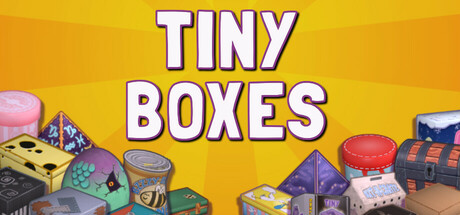
Tiny Boxes is a deceptively deep block-stacking strategy game that wraps a simple premise — drag blocks onto a grid, complete rows or columns to clear them — in a puzzle challenge that rewards patience, foresight, and spatial intelligence in equal measure. It looks approachable from the first screen, and it is. But within a few rounds, the escalating complexity of incoming block shapes transforms what felt like a casual warm-up into a genuine test of strategic thinking.
The game's defining characteristic is its absence of a timer. Unlike most puzzle games that use speed as the primary pressure mechanism, Tiny Boxes places all the weight on spatial decision-making. There's no rushing — but there is an unrelenting consequence to every misplaced block. Each poor placement narrows your future options; each well-considered one opens them up. The game ends not when time runs out, but when the board runs out of space — a conclusion that feels earned rather than arbitrary, because you can always trace exactly where the strategy started to unravel.
This makes Tiny Boxes a uniquely introspective puzzle experience. Every session is a quiet conversation between you and the board: reading the shape of what's available, predicting what the next blocks might look like, maintaining enough open space to stay flexible, and completing lines efficiently enough to keep the game alive. The satisfaction of a well-executed row clear — especially one that triggers a chain of disappearing lines — is sharp and immediate in the way the best puzzle games always are.
Whether you're playing to beat your personal best, push for the next score milestone, or simply enjoy the meditative rhythm of thoughtful block placement, Tiny Boxes delivers a consistently rewarding puzzle experience from the very first move.
Key Details:
- Genre: Block Puzzle / Strategy / Casual
- Difficulty Level: Easy to Hard (no timer, but escalates naturally with board complexity)
- Average Play Time: 10–25 minutes per session
- Best For: Fans of spatial puzzle games and block-stackers, players who enjoy strategic thinking without time pressure, anyone who loves the satisfaction of a perfectly cleared board
How to Play Tiny Boxes
Getting Started:
1. A set of blocks is presented to you — each with a distinct shape occupying multiple grid squares.
2. Click and drag a block from the selection area onto any valid position on the grid.
3. Fill a complete horizontal row or vertical column of grid squares to clear it, earning points and reclaiming that space.
4. Continue placing blocks strategically to keep the board open, completing as many rows and columns as possible.
5. The game ends when no remaining block from your current selection can fit anywhere on the board — so grid management is everything.
Basic Controls:
- Click and Drag — pick up a block from the selection area
- Drag onto Grid — place the block in a valid empty position
- Release Mouse Button — lock the block into its chosen position
Objective:
Place blocks strategically to complete full horizontal rows or vertical columns, clearing them for points and fresh grid space. Maximize your score by completing multiple lines simultaneously and maintaining enough open board space to accommodate unpredictable future block shapes. Keep playing as long as possible — the game ends when no block can legally be placed.
Tiny Boxes Features & Highlights
- No Time Pressure — A pure spatial strategy experience with no countdown timer, placing all the challenge on thoughtful board management rather than reflexes or speed
- Line-Clear Scoring System — Complete full rows or columns to clear them and score points, with longer and simultaneous clears delivering proportionally greater rewards
- Escalating Block Complexity — Block shapes grow progressively harder to place as play continues, creating naturally increasing difficulty without any artificial difficulty spikes
- Score Milestone Progression — Hit score thresholds to unlock new levels and challenges, giving each session a concrete long-term target beyond the current run's survival
- Spatial Logic Training — Every placement decision exercises pattern recognition, forward planning, and spatial reasoning in ways that make each session feel meaningfully skill-building
Tiny Boxes Tips & Strategies
Beginner Tips:
- Never fill the board edge-to-edge in the early game: Leaving a buffer of open space in the center of the board gives you flexibility when large or awkward block shapes arrive — a completely packed board has almost no recovery options.
- Complete rows and columns simultaneously when possible: A single block placement that clears both a row and a column at once doubles your points and reclaims far more board space than two separate single-line clears at the same total block count.
- Think about the blocks you don't have yet: Your current selection of blocks is only part of the picture — the next set could include large L-shapes or long straight pieces. Keep space available for shapes you can't predict.
Advanced Strategies:
- Prioritize corners and edges before they become traps: Empty corner tiles are the hardest spaces to fill efficiently because they can only be reached by blocks extending from two directions. Place small blocks into corners early while you still have the flexibility to do so cleanly.
- Work toward long rows over short ones: Completing a row of 10 scores more and clears more space than two rows of 5 at the same block expenditure. Orienting your board strategy around building toward the longest possible clears keeps your score growth and space management working together.
- When the board gets tight, clear space before filling it: The instinct when space is running low is to place blocks wherever they fit immediately — but a more deliberate approach of setting up two or three coordinated placements that clear a large section together often recovers more space than reactive single-tile gap-filling.
What to Watch Out For:
- Isolated empty tiles surrounded by filled blocks: A single empty tile with no adjacent empty neighbors can never contribute to a line clear — it's permanently wasted space. Scan the board regularly for forming isolation traps and address them before they become permanent.
- Saving space in only one area of the board: Keeping a large open zone in one corner while the rest of the board fills creates a false sense of security. When the open area fills, recovery becomes impossible quickly. Distribute open space across multiple board regions to maintain flexibility everywhere.
Tiny Boxes Game Elements Explained
Block Placement & Grid System
The grid system is the entire playing field of Tiny Boxes, and developing an intuitive sense of its geometry is the foundation of strong play. Blocks arrive in varying shapes — single squares, L-shapes, straight lines of varying lengths, T-shapes, and more — each demanding a different spatial approach to place efficiently. The core placement rule is simple: blocks must fit entirely within the grid boundaries and cannot overlap existing blocks. But the strategic depth within that rule is substantial. A block placed for short-term convenience — filling an awkward gap or completing a nearby partial row — often creates a worse long-term board state than a slightly less obvious placement that preserves future flexibility. The relationship between where you place each block and what spaces remain for future blocks is the primary analytical challenge of the game, and developing the ability to see several placement decisions ahead — not just the immediate fit — is what separates players who consistently achieve high scores from those who plateau at the same milestone repeatedly.
Line-Clear & Scoring Mechanic
The line-clear mechanic is both the primary scoring engine and the board management tool that keeps the game alive. When any complete horizontal row or vertical column of the grid is fully filled — every tile occupied by a block — that entire line disappears instantly, awarding points and returning those tiles to empty status. The scoring system rewards quality of clearing over raw quantity of blocks placed: a placement that completes two lines simultaneously earns more than twice what two separate single-line clears would, creating a strong incentive to set up multi-line clears rather than taking the first available single-line opportunity. Beyond scoring, line clears are the game's survival mechanism — each clear reclaims the only fresh space available in a game with no board expansion. Managing the timing and positioning of line clears is therefore the most important ongoing strategic decision of every run: clearing too early wastes potential multi-line setups, while delaying too long risks having no clearable lines available when the board becomes critically congested.
Escalating Difficulty & Block Progression
Tiny Boxes' difficulty curve is elegant in its restraint — rather than introducing sudden rule changes or new mechanics, it simply adjusts the composition of incoming block shapes to create progressively harder placement challenges. Early blocks tend toward simpler shapes that fit easily into standard grid configurations. As play continues and scores climb, the block selection skews toward larger, more irregular shapes that demand more creative placement solutions and leave fewer forgiving options. This escalation feels organic rather than punishing because it mirrors the natural consequence of your own board decisions: a well-managed board absorbs complex blocks gracefully, while a poorly managed one makes them feel impossible. The game's score milestone system layers structured achievement onto this organic escalation, providing specific targets that mark each new level of challenge and give players a clear progression arc to chase across multiple sessions. Each milestone reached is both a score achievement and a confirmation that your spatial reasoning has genuinely improved.
Tiny Boxes FAQ
Q: How do I clear lines in Tiny Boxes?
A: Lines clear automatically the moment a complete horizontal row or vertical column is fully filled with blocks — no additional action required. Place blocks to fill every tile in a line from one end of the grid to the other, and it disappears instantly, awarding points and freeing that space for future placements. Both rows and columns can be cleared, and clearing both simultaneously with a single block placement earns a bonus.
Q: What happens when I can't place any more blocks?
A: When none of the currently available blocks can fit into any remaining open space on the grid — either because the board is too full or because the remaining spaces don't match any available block shape — the game ends and your final score is recorded. This is the only end condition in Tiny Boxes; there are no lives, timers, or penalties beyond the run ending. Your score at that moment determines your milestone progress and unlocks.
Q: Is there a time limit in Tiny Boxes?
A: No — Tiny Boxes has no timer of any kind. You can take as long as you need to evaluate each block placement before committing. The challenge comes entirely from the spatial and strategic demands of fitting blocks onto a finite grid, not from speed. This makes it an unusually pure strategic puzzle experience where careful deliberation is always rewarded over fast reaction.
Q: How do I unlock new levels in Tiny Boxes?
A: New levels unlock by reaching score milestones — specific point thresholds that mark your progression through the game's difficulty tiers. Focus on maximizing the efficiency of each run by setting up multi-line clears and managing your board space carefully, and your score will grow consistently toward the next milestone. Each new level unlocks more challenging block compositions and higher score targets to pursue.
Q: What's the best way to avoid running out of space?
A: The most reliable space management habits are: maintaining open buffer space distributed across the whole board rather than concentrated in one area, prioritizing multi-line clear setups over single-tile gap-filling, filling corner and edge tiles early with small blocks before they become inaccessible traps, and always thinking at least two or three block placements ahead rather than reacting only to the current block. The board rarely becomes unmanageable suddenly — it usually narrows gradually through a series of slightly suboptimal placements that compound over time.
Games Like Tiny Boxes
If you like Tiny Boxes, you might also enjoy:
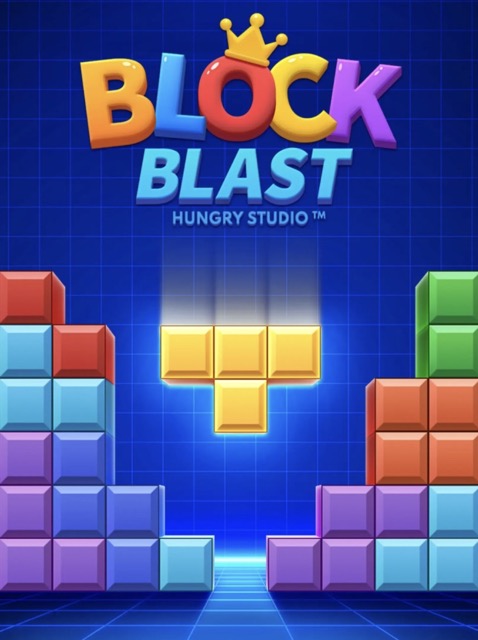
- Block Blast - It rewards the same spatial planning skills with block placement and limited room.
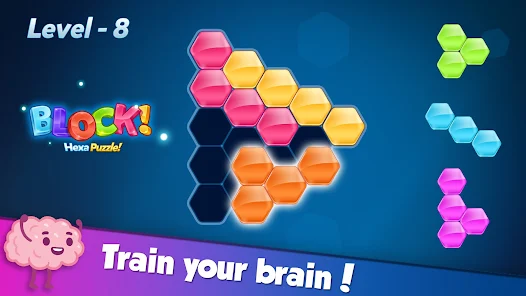
- Hexa Puzzle - It offers another compact shape-fitting challenge where every placement matters.
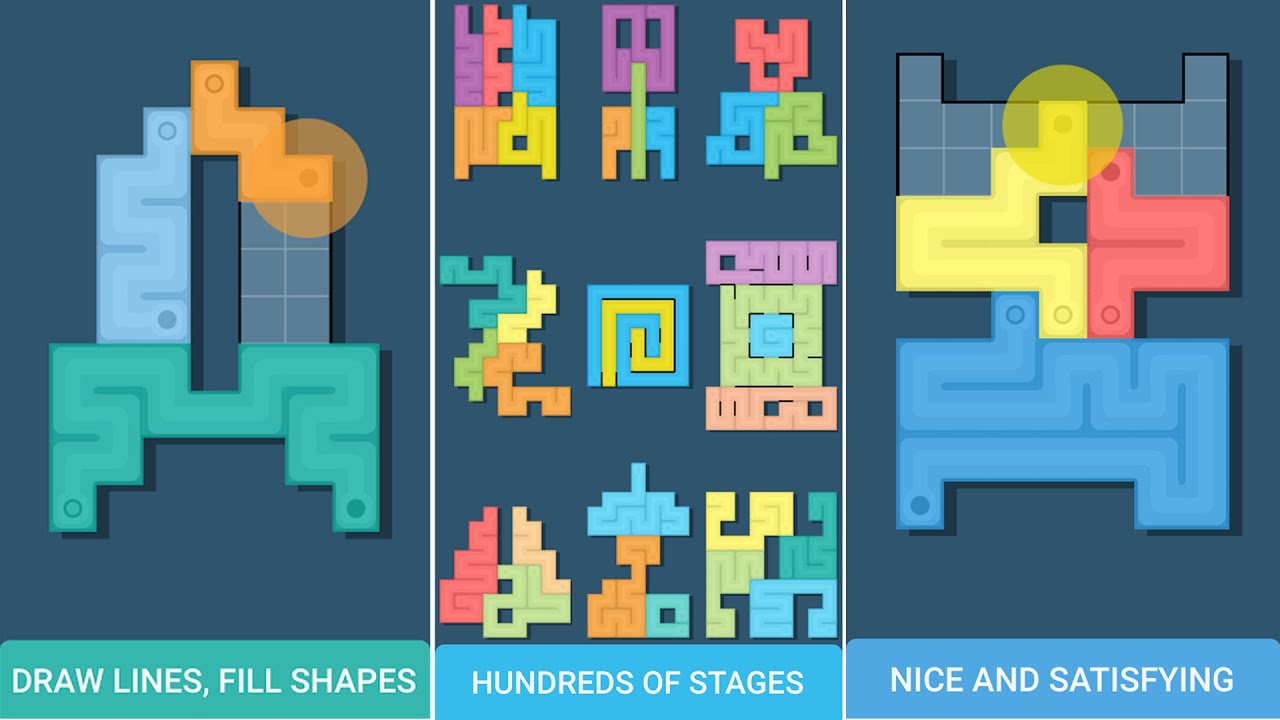
- Lines To Fill - It shares the same clean logic-puzzle feel with route planning and limited space.