1. Poor Bunny Game Overview
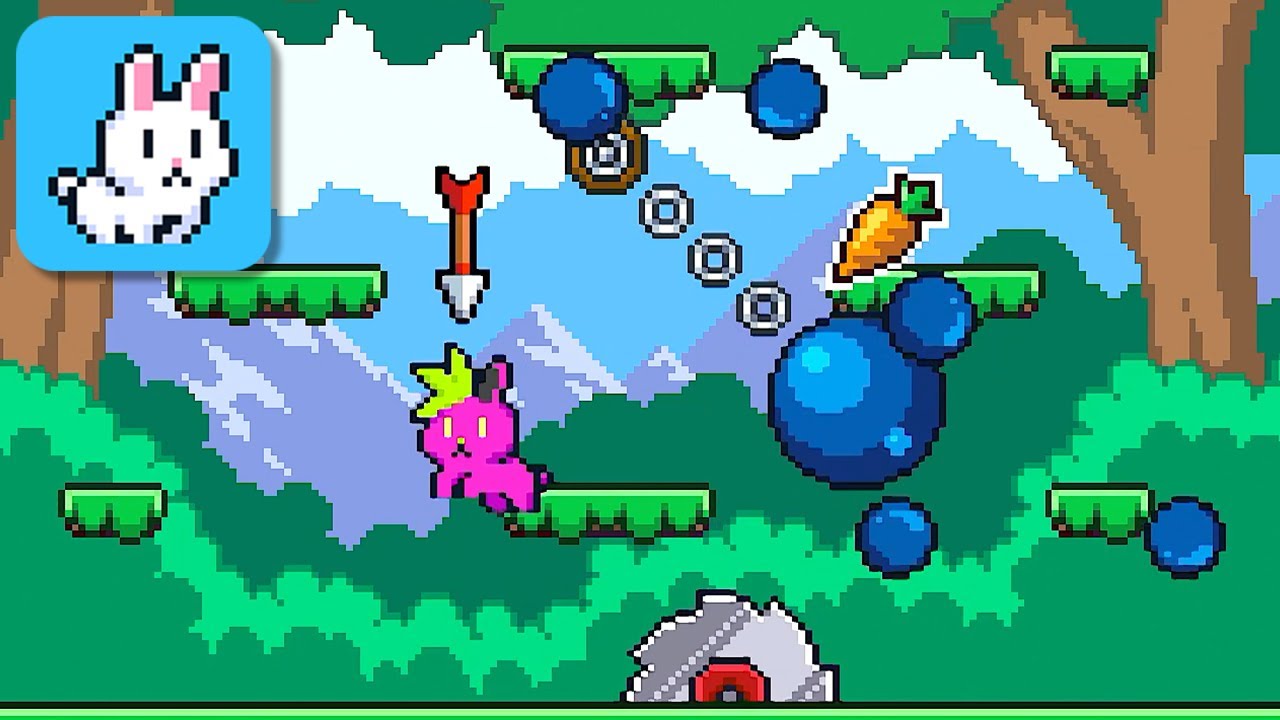
Poor Bunny is a fast, frantic arcade game that wraps relentless trap-dodging and carrot-collecting chaos in an irresistibly cute package. You control an adorable rabbit navigating a playing field that's constantly trying to end your run — crushing blocks descend from above, spikes rise from below, lasers sweep across the screen, and every moment of inattention is punished immediately. The contrast between the game's cheerful, colorful visual design and the genuine intensity of its survival challenge is what makes Poor Bunny so compelling.
The core gameplay loop is elegantly simple: collect carrots, survive traps, outlast the chaos. But executing that loop requires constant vigilance and sharp reflexes — hazards appear without warning, and the game's design ensures no two sessions feel identical. Regular carrots add to your score; golden carrots provide premium boosts that make the difference between a good run and a great one. Every carrot collected is a risk taken, and learning to read the trap patterns well enough to collect carrots efficiently while staying alive is the skill that drives Poor Bunny's replayability.
The two-player mode adds an entirely new dimension to the game's appeal. Playing cooperatively — both rabbits working to survive as long as possible — creates a shared tension and joint celebration that's rare in casual arcade games. Competitive mode flips the dynamic entirely, turning carrot-collection into a rivalry where one player's gain is another's motivation. Either way, a single device supports both players simultaneously, making Poor Bunny an accessible pick-up-and-play multiplayer experience.
With 105 unlockable rabbit skins ranging from White Rabbit to Tiger Rabbit, Robot Rabbit, and Neon Rabbit, there's a cosmetic progression system that gives long-term players something to chase beyond high scores. Poor Bunny is arcade gaming at its most accessible and most unforgiving — simultaneously.
Key Details:
- Genre: Arcade / Reflex / Survival
- Difficulty Level: Medium to Hard (trap patterns intensify continuously)
- Average Play Time: 5–15 minutes per session
- Best For: Fans of reflex-based arcade games, players who enjoy competitive two-player challenges, anyone who appreciates cute visuals hiding genuinely intense survival gameplay
How to Play Poor Bunny
Getting Started:
1. Choose your game mode — single-player for practice and high score chasing, or challenge mode for competitive two-player play on one device.
2. Select your rabbit skin from the available starting options (White, Navy Blue, Brown, Black, or Beige Rabbit), or use unlocked skins if you have them.
3. Begin moving immediately — standing still is dangerous as traps appear across the entire play area.
4. Collect carrots by moving your rabbit onto them — regular carrots boost your score; golden carrots provide premium bonuses.
5. Dodge all incoming hazards — crushing blocks, spikes, and lasers — by reading their approach patterns and repositioning before impact.
Basic Controls:
- Single Player — Arrow Keys or WASD — move the rabbit in all four directions
- Two Player — Player 1: Arrow Keys / Player 2: WASD — both players use simultaneous controls on one device
Objective:
Survive as long as possible while collecting as many carrots as possible. In single-player mode, chase your personal high score across unlimited attempts. In challenge mode, outlast or out-collect your opponent — the player with the most carrots when one player fails wins the round.
Poor Bunny Features & Highlights
- Relentless Multi-Hazard Trap System — Crushing blocks, floor spikes, and lasers appear dynamically across the play field, creating constantly shifting survival patterns that demand sustained attention and sharp reflexes
- Dual Game Modes — Single-player mode for solo high-score practice and competitive two-player challenge mode on one device, where the game ends when either player fails
- 105 Unlockable Rabbit Skins — Earn new skins through carrot collection across sessions — from Tiger Rabbit and Robot Rabbit to the sought-after Yellow and Neon Rabbit designs
- Regular and Golden Carrots — Standard carrots build your score steadily while golden carrots provide premium boosts, rewarding brave collection attempts in high-hazard areas
- Family-Friendly Design — Vibrant, cheerful visuals and violence-free gameplay make Poor Bunny suitable for all ages while the reflex challenge keeps experienced players genuinely engaged
Poor Bunny Tips & Strategies
Beginner Tips:
- Keep moving constantly — never stand still: Static rabbits are easy targets for traps that cover the area they're occupying. Continuous movement — even small repositioning between hazards — dramatically reduces the chance of a trap appearing directly on your position.
- Prioritize survival over carrot collection: A carrot you can't safely reach without taking a hit isn't worth collecting — no amount of score matters if it ends your run. Let unreachable carrots go and focus on staying alive long enough to collect the next, safer one.
- Learn to read trap telegraphs before they activate: Most hazards in Poor Bunny have a brief visual warning signal before they become dangerous — a shadow appearing before a block falls, a spike rising animation beginning before full extension. Learning to recognize these signals gives you the reaction window needed to reposition before impact.
Advanced Strategies:
- In two-player cooperative mode, divide the play area between players: Rather than both rabbits occupying the same zone (which creates collision and routing conflicts), each player should claim a half of the play field and manage their own area's carrots and hazards independently. Coordinating zone boundaries and communicating hazard positions keeps both rabbits alive significantly longer than uncoordinated shared-space play.
- Chase golden carrots selectively, not reflexively: Golden carrots are worth the risk only when the path to them is relatively clear — charging toward a golden carrot through multiple active hazards almost always ends the run faster than the bonus justifies. Evaluate each golden carrot's accessibility before committing to the collection attempt.
- In competitive mode, watch your opponent's movement: Your opponent's movement tells you where hazards are concentrated — if they're suddenly avoiding a zone, there's probably a trap cluster there worth your own attention. Opponent behavior is free spatial information about hazard positions that solo play never provides.
What to Watch Out For:
- Hazard clustering: Multiple trap types occasionally activate in the same area simultaneously, creating temporarily impassable zones that must be abandoned entirely rather than navigated through. Recognizing when an area has become too hazardous to remain in and relocating quickly is a critical survival skill — attempting to stay in a clustering zone almost always ends the run.
- Over-committing to a carrot in competitive mode: In challenge mode, the pressure to collect more carrots than your opponent creates an incentive to take risks that single-player survival instinct wouldn't permit. Dying trying to reach a carrot your opponent didn't bother with ends the game for both players — the moderate collection strategy that keeps you alive longer almost always scores more total carrots than the aggressive strategy that frequently ends runs early.
Poor Bunny Game Elements Explained
Trap System & Hazard Design
The trap system is the core challenge architecture of Poor Bunny and the mechanic that drives all its reflex gameplay. Three primary hazard types operate simultaneously to create a constantly dynamic danger field. Crushing blocks descend from above — the most visually prominent hazard type, telegraphed by a brief shadow that appears before the block drops. Avoiding them requires identifying the shadow's position and moving clear before impact, a reaction window that becomes more demanding as the game's pace intensifies. Floor spikes rise from below with less warning than crushing blocks, targeting the ground-level zones where carrot collection naturally draws players. Their brief activation animation is the only signal before full extension — recognizing and responding to it quickly enough to move clear is the reflex skill that spike hazards specifically train. Lasers sweep horizontally or vertically across sections of the play field, requiring sustained repositioning to stay ahead of the beam rather than a single evasive move. Together, these three hazard types create a play environment where no zone is permanently safe and where reading multiple simultaneous threat vectors — which block, which spike, which laser — is the constant cognitive demand that makes Poor Bunny's survival challenge feel genuinely engaging.
Two-Player Modes & Cooperative/Competitive Dynamics
The two-player system is one of Poor Bunny's most distinctive features — the ability to run both players simultaneously on a single device, using two separate control schemes (arrow keys and WASD), creates an accessible shared-screen multiplayer experience with no setup required. The two available modes create meaningfully different social dynamics. Cooperative mode aligns both players' interests: both rabbits are trying to survive as long as possible, both lose if either one fails, and the shared threat creates the kind of joint tension and mutual relief that makes co-op arcade gaming socially engaging. Strategic coordination — dividing the play area, communicating hazard positions, prioritizing each other's survival — adds a communication layer to the reflex gameplay that pure solo play doesn't offer. Competitive mode inverts this dynamic completely: both players want to collect more carrots than the other, but the game still ends when either player fails, creating the peculiar dynamic where you simultaneously want your opponent to succeed (because their failure ends your run too) and want them to fall behind on carrot collection. Navigating this tension — staying competitive in collection while not creating hazards for your opponent that end both runs prematurely — is the unique strategic dimension of Poor Bunny's competitive mode.
Skin Unlock System & Progression
The 105 rabbit skin unlock system provides Poor Bunny's long-term engagement layer, transforming what might otherwise be a purely session-based arcade game into one with an ongoing collection progression that gives dedicated players something to work toward across many runs. Skins unlock by accumulating carrots collected across sessions — each carrot gathered contributes to cumulative totals that trigger new unlocks at specific thresholds. The five starting skins (White, Navy Blue, Brown, Black, and Beige Rabbit) are joined progressively by character skins with more elaborate designs: Tiger Rabbit, Robot Rabbit, Ranger Rabbit, Water Rabbit, and Domino Rabbit among many others, with the Yellow Rabbit and Neon Rabbit representing the most sought-after designs among the player community for their distinctive visual identities. Each new skin is purely cosmetic — no gameplay stat differences between rabbit designs — making the unlock system accessible and fair while still providing genuine motivation for continued play. The breadth of the skin catalog (105 total) ensures that even highly dedicated players will have unlock targets to pursue across extended engagement with the game.
Poor Bunny FAQ
Q: What are the two game modes in Poor Bunny?
A: Poor Bunny offers single-player mode and two-player challenge mode. In single-player mode, you play alone — collecting carrots and dodging traps to achieve the highest possible score across unlimited attempts, with no time pressure other than surviving. In two-player challenge mode, two players share one device using separate controls (arrow keys and WASD). The game ends when either player fails, and whoever collected more carrots during the run wins. Both modes use the same controls and hazard system.
Q: How do I unlock new rabbit skins?
A: Rabbit skins unlock by collecting carrots during gameplay — each carrot you gather contributes to your cumulative collection total, and specific milestones within that total trigger new skin unlocks automatically. You start with five free skins (White, Navy Blue, Brown, Black, and Beige Rabbit) and progressively unlock more elaborate designs like Tiger Rabbit, Robot Rabbit, and the popular Yellow and Neon Rabbit skins as your collection total grows across sessions.
Q: What's the difference between regular and golden carrots?
A: Regular carrots appear frequently across the play field and contribute a standard score value to your run total. Golden carrots appear less frequently, are typically positioned in higher-hazard areas, and provide a premium score bonus when collected. While golden carrots are more valuable, they often require navigating through more active traps to reach — assess each golden carrot's accessibility before committing to the collection attempt, as the risk of ending your run early usually outweighs the bonus on a hazardous collection path.
Q: Is Poor Bunny suitable for children?
A: Yes — Poor Bunny is specifically designed to be family-friendly. The visual style is colorful and cheerful, the rabbit characters are appealing to younger players, and the gameplay contains no violence or age-inappropriate content. The reflex challenge scales naturally with play experience, making earlier gameplay accessible to younger children while the trap intensity keeps older players genuinely challenged. The two-player mode on a single device makes it an ideal shared gaming experience for children playing together or with family members.
Q: How many rabbit skins are there in total?
A: Poor Bunny features 105 total rabbit skins available to unlock through gameplay. The five starter skins are immediately available at no cost. The remaining 100 skins span a wide variety of designs — from themed skins like Tiger Rabbit and Robot Rabbit to elemental designs like Water Rabbit — with the Yellow Rabbit and Neon Rabbit among the most popular and sought-after designs in the collection for their distinctive visual identities.
Games Like Poor Bunny
If you like Poor Bunny, you might also enjoy:
- Apple Worm - It offers another compact movement challenge where safe pathing matters more than rushing.
- Cat Disco - It shares the quick-reaction arcade feel with short, replayable sessions.
- Capybara Clicker - It keeps the cute-animal theme in a more relaxed idle clicker format.