

1. Block Blast Game Overview
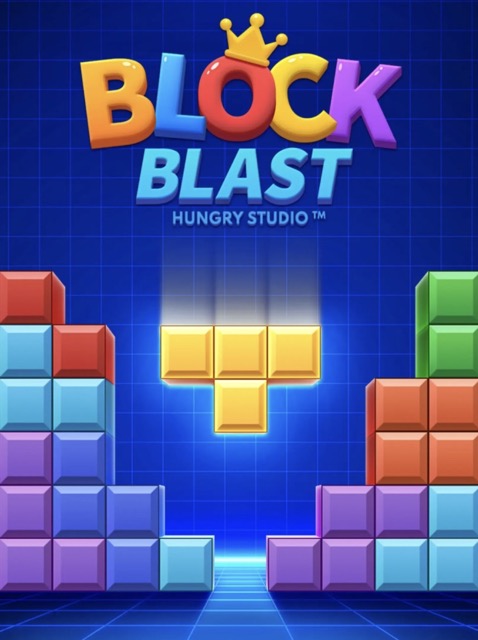
Block Blast is a beautifully addictive drag-and-drop puzzle game that takes the classic satisfaction of line-clearing block gameplay and refines it into one of the most replayable casual puzzle experiences available. On an 8×8 grid, you receive three block shapes per round and drag them into position — filling rows and columns to clear them, earn points, and keep the board alive as long as possible.
The game's deceptive genius is in what it removes as much as what it includes. No rotation. No timer. No falling pieces. What remains is a pure spatial strategy puzzle where every placement decision is entirely deliberate — and entirely your responsibility. Without the pressure of falling blocks or ticking clocks, Block Blast creates space for the kind of thoughtful, satisfying puzzle-solving that feels productive and relaxing simultaneously.
The combo system is the game's most exciting dimension. Clearing a single row earns points; clearing two rows at once with a single block placement earns considerably more; clearing multiple rows and columns simultaneously in a cascade of disappearing lines delivers the kind of visual and scoring payoff that makes Block Blast genuinely hard to put down. Chasing these multi-line combo moments — setting up the board so that a single placement triggers a spectacular clear — becomes the game's most compelling long-term goal.
The challenge escalates naturally and honestly: no artificial difficulty spikes, no rule changes, just the progressive reality that as your blocks accumulate, your placement options narrow, and the spatial reasoning required to stay in the game grows more demanding. Block Blast rewards players who think ahead, balance the board, and plan for shapes they haven't received yet — and it does so with clean, colorful visuals and a satisfying tactile quality that makes every clear feel earned.
Key Details:
- Genre: Block Puzzle / Strategy / Casual
- Difficulty Level: Easy to Hard (escalates naturally with board complexity)
- Average Play Time: 10–30 minutes per session
- Best For: Fans of block and line-clearing puzzle games, players who enjoy strategic spatial thinking without time pressure, anyone who loves the satisfaction of a perfectly planned combo clear
How to Play Block Blast
Getting Started:
1. Three block shapes are presented to you each round — study their shapes before placing any of them.
2. Drag a block from the selection area onto the 8×8 grid, positioning it to contribute toward completing full rows or columns.
3. When a complete horizontal row or vertical column is filled, it disappears instantly and earns you points.
4. Consider all three available blocks as a set before placing any — their combined shapes determine the best overall placement strategy for the round.
5. Continue placing blocks to keep the board clear and your score climbing; the game ends when no remaining block can fit anywhere on the board.
Basic Controls:
- Click and Drag Block — pick up a block shape from the selection area
- Drag onto Grid — position the block on the 8×8 grid
- Release — lock the block into its chosen position
*Note: Blocks cannot be rotated. Each must be placed in the exact orientation shown.*
Objective:
Place block shapes strategically on the 8×8 grid to complete full rows and columns, clearing them for points and fresh board space. Maximize your score through multi-line combo clears while keeping the board open enough to accommodate future block shapes. The game ends when no block from your current set can legally be placed anywhere on the grid.
Block Blast Features & Highlights
- No-Rotation Block Placement — Blocks must be placed in their exact presented orientation, adding a meaningful layer of spatial challenge that elevates the game beyond simple Tetris-style mechanics
- Multi-Line Combo Clearing — Engineer single placements that simultaneously clear multiple rows and columns for bonus points and satisfying visual cascade animations
- Three-Block Round System — Receiving three shapes simultaneously allows strategic cross-block planning — considering how all three pieces interact with the board before placing any of them
- No Timer, Pure Strategy — Play entirely at your own pace with no time pressure, creating a thoughtful, relaxing puzzle experience where every placement decision can be fully considered
- Clean Visual Design — Vibrant, colorful blocks on a calm background with smooth clearing animations make every session visually polished and satisfying to play
Block Blast Tips & Strategies
Beginner Tips:
- Evaluate all three blocks before placing any: The most common early mistake is placing the first block that fits without considering how the other two will integrate. Looking at all three as a group often reveals a placement sequence that sets up a row clear that no single block could achieve alone.
- Keep the center of the board open as long as possible: Edge and corner areas are easiest to fill with irregular block shapes, so work from the outside in — filling center tiles too early creates the board congestion that typically ends games prematurely.
- Never fill a corner without a plan to clear it: Corner tiles are the hardest to include in row or column clears because they require full lines in two directions. Place blocks into corners only when doing so directly contributes to a completable line — not just to use available space.
Advanced Strategies:
- Set up combo clears two rounds in advance: The highest-scoring plays are multi-row clears that clear three or four lines simultaneously. These rarely happen accidentally — they require building the board over several rounds toward a specific combo moment. Identify which rows and columns are closest to completion and orient your placements toward finishing multiple simultaneously.
- Balance the board horizontally and vertically: Boards that fill heavily on one side while staying empty on the other create shape-fitting problems when large irregular blocks arrive. Distributing fill across the full board maintains flexibility for the widest range of incoming shapes.
- Use partial rows as staging areas, not dead space: A row that's seven of eight tiles filled isn't wasted — it's a single-tile gap that can be completed by any block containing a single protruding unit. Intentionally building near-complete rows and then filling their gaps with subsequent blocks is a highly efficient scoring strategy.
What to Watch Out For:
- Large L-shaped or irregular blocks arriving with no valid position: These blocks require specific open configurations on the board — if you've filled the board without leaving space for them, the game can end on a shape you had no way to place. Always maintain at least one region of open space large enough to accommodate the biggest shapes you might receive.
- Chasing individual line clears at the expense of combo setup: Clearing every possible row immediately as you build it feels efficient but often prevents the multi-line combo setups that drive truly high scores. Sometimes leaving a nearly complete row unfilled while building adjacent rows to complete simultaneously is a significantly higher-return strategy.
Block Blast Game Elements Explained
Block Placement & Grid System
The 8×8 grid system is Block Blast's complete playing field, and the interplay between block shapes and grid geometry is where all the game's strategic depth lives. Unlike games where pieces fall automatically or can be rotated freely, Block Blast's drag-and-drop placement system gives you complete control over where each piece goes — but not its orientation. This no-rotation rule is the most strategically significant design choice in the game: it means that each block's presented shape is exactly what you're working with, and fitting irregular shapes into increasingly filled grids requires genuine spatial reasoning rather than the rotation-based workaround that makes many block games more forgiving. The three-block-per-round system compounds this challenge by presenting shape-fitting problems not as individual puzzles but as combinatorial ones — the optimal placement for block one depends on where blocks two and three will go, and finding the globally optimal solution for all three together is systematically harder than optimizing each independently. Developing the habit of evaluating all three blocks as a set before touching any of them is the single most impactful strategic shift a Block Blast player can make.
Line-Clear & Combo Scoring System
The line-clear mechanic is both Block Blast's primary scoring engine and the board management tool that keeps games alive. When any complete row or column is fully filled — all eight tiles occupied — it clears instantly, returning those tiles to empty status and awarding points. The scoring system rewards quality of clearing exponentially rather than linearly: a placement that clears two rows simultaneously scores significantly more than two separate single-row clears, and a placement triggering a cascade of three or four simultaneous clears — a full combo — delivers the game's most spectacular scoring moments. Beyond the points, multi-line combos are the most efficient board management moves available: they reclaim maximum grid space in minimum placement actions, extending the game significantly compared to the same number of blocks placed without generating clears. The combination of scoring incentive and board management necessity makes combo hunting not just exciting but strategically essential for long-running high-score sessions. Players who consistently engineer three and four-line clears will outlast and outscore players of equal spatial ability who optimize for single-line clears.
Difficulty Escalation & Board Management
Block Blast's difficulty curve is elegant precisely because it requires no external intervention — the game never introduces new rules, penalties, or mechanics to increase challenge. Instead, the board's progressive filling is itself the difficulty mechanism: each placed block that doesn't generate a clear slightly reduces the grid's remaining space, narrowing the range of shapes that can legally be placed anywhere on the board. This self-generating difficulty means that poor early-game decisions compound gradually into an increasingly constrained board state, while good early decisions — maintaining balanced open space, building toward combo clears, avoiding isolated gaps — compound equally into a board that stays manageable session after session. The game ends not with a dramatic failure event but with a quiet impossibility: the moment none of the three current blocks has any valid position remaining. Reading the board well enough to anticipate this moment while there's still time to prevent it — clearing lines before the board becomes too full to accommodate large shapes — is the skill that separates players who achieve high scores from those who consistently end games sooner than necessary.
Block Blast FAQ
Q: How do I clear lines in Block Blast?
A: Lines clear automatically the moment a complete horizontal row or vertical column of the 8×8 grid is fully occupied — no additional action required. Place blocks to fill every tile in a row or column from one end to the other, and it disappears instantly, awarding points and freeing that space. Both rows and columns can be cleared, and clearing multiple lines simultaneously with a single block placement awards bonus combo points.
Q: Can I rotate blocks in Block Blast?
A: No — blocks in Block Blast cannot be rotated. Each shape must be placed in the exact orientation in which it's presented. This no-rotation rule is central to the game's strategic challenge, requiring you to work with each shape's specific geometry rather than adjusting orientation to fit. Evaluate each block's shape carefully before placing it, as the orientation is fixed from the moment it appears.
Q: How does the three-block system work?
A: Each round presents you with three block shapes simultaneously. You can place them in any order you choose, and all three must be placed before a new set of three is provided. Because the three shapes interact with each other and the board as a combined set, evaluating how all three will fit together before placing any of them leads to significantly better outcomes than placing each one independently as you go.
Q: When does the game end in Block Blast?
A: The game ends when none of the three current block shapes can legally be placed anywhere on the remaining grid. This occurs when the board has filled sufficiently that no open configuration matches any of the three available shapes. Preventing this requires maintaining enough open board space — and the right configuration of that space — to accommodate the widest possible range of incoming shapes, including large irregular ones.
Q: What's the best strategy for achieving high scores?
A: The highest scores come from consistently engineering multi-line combo clears — single placements that clear two, three, or four lines simultaneously. Build toward combos by constructing near-complete rows and columns in parallel, then completing all of them at once with a single strategic placement. Balance your board by distributing placed blocks across the full grid rather than concentrating fills on one side, and always maintain enough open space in at least one region to accommodate the largest shapes you might receive in future rounds.
Games Like Block Blast
If you like Block Blast, you might also enjoy:
- Hexa Puzzle - It shares the core shape-fitting challenge with a different board geometry.
- Tiny Boxes - It offers another tight spatial puzzle built around avoiding dead space.
- Farming 10X10 - It has a similar line-clearing block puzzle rhythm with a crop theme.